The Vicious Cycle Of Stress Eating

The Vicious Cycle Of Stress Eating
The Vicious Cycle Of Stress Eating

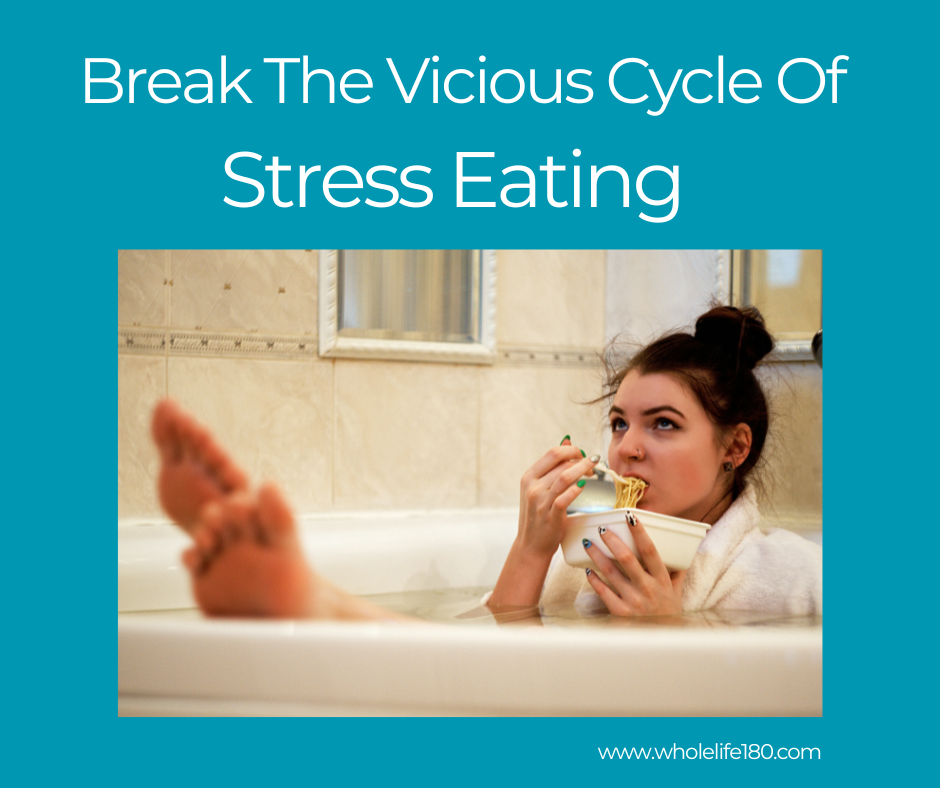
A woman in a bathtub eating a bowl of food with the words break the vicious cycle of stress eating below her

The Vicious Cycle of Stress Eating


When life gets overwhelming, many of us turn to food for comfort. Stress eating is using food to suppress or soothe negative emotions like anxiety, frustration, anger or sadness rather than satisfying physical hunger. While it may provide temporary relief, emotional eating often leads to feelings of guilt, potential weight gain and even more stress down the road.


Why We Stress Eat


There are both psychological and physiological reasons why we are drawn to eat more when feeling stressed 


▪️Emotional Connection to Food

From an early age, food is used to reward, soothe or celebrate. We associate certain foods with positive feelings and memories of comfort. When stressed, we crave those same foods to self-soothe.

▪️Stress Hormones

Stress causes a spike in the hormone cortisol which increases appetite and motivates cravings for sugary, salty, and fatty foods that provide bursts of pleasure and temporary calming effects.

▪️Distraction and Numbing 

Eating provides a distraction or numbing from whatever is causing the stress. For a short time, the mind is focused on the gratification of eating instead of the stressor.


Breaking The Stress Eating Cycle


While an occasional lapse isn’t the end of the world, repeatedly using food to cope with stress can lead to serious problems like obesity, diabetes and other health issues. Here are some tips to avoid or break the stress eating habit.


▪️Identify Triggers

Become more aware of your personal triggers for stress-related munching, whether it’s certain locations, emotions, people or times of day

▪️Find Other Comforts

Make a list of healthier alternatives that provide comfort, distraction, or pleasure like taking a bath, calling a friend, going for a walk or listening to music.

▪️Don’t Restrict

Completely restricting foods you enjoy can lead to cravings and binges. Practice moderation by savoring small portions of “fun foods” so you don’t feel deprived.

▪️Reduce Overall Stress

While not always possible, reducing overall life stressors through exercise, getting enough sleep and effective time management can minimize relying on food for relief.


Stress eating is a common challenge, but being mindful of triggers and having a plan for dealing with cravings in a healthier way can help break the vicious cycle. 


For support reach out at amyfein@wholelife180.com or book a free consult at https://my.practicebetter.io/#/618d433639803304106fdbfd/bookings


By Amy Fein February 18, 2026
When Your Nervous System Learns To Scan For Danger If you grew up with chaos, criticism or instability, it makes sense that you feel “on guard” all the time. Your brain did exactly what it was supposed to do. It learned how to keep you safe in a world that didn’t feel safe. As a kid, were you constantly reading the room? ▪️Is Mom in a bad mood? ▪️Did Dad sound annoyed? ▪️Did I say the wrong thing? In that kind of environment, your nervous system is trained to scan for threat instead of possibility . The brain’s threat systems learn to stay on high alert, always looking for what might go wrong next. Over time, that “watch your every move” environment doesn’t just live outside of you anymore. It becomes an internal autopilot voice that keeps you hyper aware of perceived mistakes, tone, facial expressions and tiny energy shifts around you. That internal voice is active and hypervigilant even when you are safe. When criticism or unpredictability were your norm, your brain adapted. It linked being loved and feeling safe with avoidant behaviors that lessened the chances of feeling stressed or unsafe. Examples of avoidant behaviors include, ▪️Getting it right the first time. ▪️Anticipating other people’s needs. ▪️Minimizing your feelings. ▪️Staying small and non disruptive Eventually hypervigilance gradually becomes your base state. You don’t need a critical parent in the room anymore. You carry that voice unconsciously inside. You might notice things like, ▪️Ruminating and replaying conversations in your head. Cringing at “small mistakes” ▪️You assume you are in trouble when someone is quiet. ▪️You feel like you’re “too much” or “not enough”, often at the same time. None of this means you’re broken. It means that your brain learned a protective survival strategy that outlived the environment it was built for. Where neuroplasticity comes in. Your brain is changeable. Neuroplasticity is the brain’s ability to form new pathways and weaken old ones. What your brain learned from chaos and criticism, it can unlearn in safety and compassion. Hypervigilance and harsh self criticism are not fixed personality traits. They are habits in your nervous system. Habits can be retrained with small, repeated experiences of safety. What’s the first step? Notice patterns. The first step in retraining your brain is awareness. Just neutral, curious awareness. Instead of “what’s wrong with me”, try “This is my old survival pattern showing up. My brain is trying to protect me the way it learned in childhood”. Tiny shifts matter. When you see hypervigilance as a survival code, and not a character flaw, you reduce shame and negative thought loops which keeps the threat system switched on. Repeated messages of safety give your brain new data. When you notice these hypervigilant thoughts, say to yourself, “This is my nervous system trying to keep me safe. Thank you but we are not in danger right now”. Once you start to notice these patterns, and the frequency of these negative thought loops you begin to really understand that your brain learned to pair certain cues with danger. Neuroplasticity work means gently pairing those old cues with new experiences of safety. You’re teaching your nervous system, “we noticed that cue, but we don’t have to launch into full alarm anymore”. Over time, your brain starts updating its prediction from “danger is guaranteed” to “this might be uncomfortable but I am safe in this moment”. Every time you catch the old “script” and offer a new one, you strengthen a different pathway. Repetition is more important than perfection. T Want support with this process? If this resonates with you, if you’re always on edge, scanning for rejection, replaying conversations, I want you to know, nothing about this makes you weak. It means that your brain did its best in a hard environment and now it deserves the chance to learn something new. This is the work. The healing. The great unlearning. When doing this work, I help people with: ▪️Understanding their “survival codes” like hypervigilance and self criticism. ▪️Learning practical, evidence backed ways to calm the nervous system. ▪️Using neuroplasticity tools to build new patterns of safety, self trust and possibility. You don’t have to keep living as if you’re one wrong move away from losing everything. Your brain learned that once but with the right support your brain can learn something much kinder, gentler, and open to possibility.
By Amy Fein October 6, 2025
Letting Go Of Old Thought Patterns Is Possible Thanks To Neuroplasticity